
| Prof. Jianping GouIEEE Senior Member Southwest University, China Biography: Jianping Gou, Ph.D. in Engineering, Professor, Ph.D. Supervisor, has been selected as an Outstanding Young Core Instructor under the “Qing Lan Project” of Jiangsu Higher Education Institutions, a recipient of the International Exchange Program for Postdoctoral Researchers of China, and a talent under the Chongqing Overseas Returnee Entrepreneurship and Innovation Support Program. He serves as an Executive Committee Member of the Technical Committee on Multimedia, the Technical Committee on Computer Vision, and the Youth Working Committee of the Artificial Intelligence Society. He is also an IEEE Senior Member, a Senior Member of the China Society of Image and Graphics (CSIG), and a Senior Member of the China Computer Federation (CCF). Professor Gou’s research focuses on theories and applications in machine learning and pattern recognition. He has published more than 140 academic papers in well-known journals and conferences, including IJCV and ACM/IEEE Transactions, among which over 90 are indexed in SCI. His publications include 4 highly cited papers and 1 hot paper, with a single paper receiving nearly 2,000 citations on Google Scholar. He has led 6 research projects, including general and youth programs of the National Natural Science Foundation of China as well as provincial and ministerial-level projects. He holds 8 authorized national invention patents. His honors include the First Prize for Excellent Paper at the Sichuan-Chongqing Science and Technology Academic Conference, the Third Prize of Jiangsu Science and Technology Award, and the Third Prize of Hospital Science and Technology Innovation Award of the Chinese Hospital Association. Speech Title: Diversity-driven Knowledge Distillation for Large-scale Model Compression Abstract: |
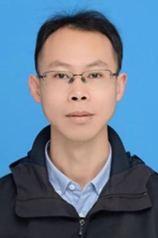
| Prof. Yue LiuBeijing Institute of Technology, China Biography: Yue Liu is a Professor and Ph.D. supervisor at the School of Optics and Photonics, Beijing Institute of Technology. He serves as Director of the Institute of Optoelectronic Information Technology and Color Engineering and Deputy Director of the Beijing Engineering Research Center of Mixed Reality and Novel Display. He is also a member of the expert panel for the National Key R&D Program on “Culture, Science & Technology and Modern Service Industries.” In 2024, he was selected for a national-level innovation talent support program. His main research areas include virtual reality and augmented reality, natural human–computer interaction, and computer vision. He currently serves as Vice Chair of the Technical Committee on Intelligent Interaction of the Chinese Association for Artificial Intelligence; Vice Chair of the Technical Committee on Human–Computer Interaction of the China Computer Federation; Vice Chair of the Virtual Reality Industry Branch of the Chinese Institute of Electronics; and Standing Board Member, Deputy Secretary-General, and Chair of the Virtual Reality Technical Committee of the China Society of Image and Graphics. He has previously served as Vice Chair of the Virtual Technology and Applications Technical Committee and Vice Chair of the Virtual Simulation Education and Teaching Technical Committee of the Chinese Association for Simulation, as well as Vice Chair of the Virtual Reality Technical Committee of the China Computer Federation. He is currently the Chief Scientist of a National Key R&D Program project under the 14th Five-Year Plan. He has published more than 100 papers and filed over 50 patents. His research has been recognized with a Second Prize of the National Award for Technological Invention. Speech Title: Multi-Scale Intrinsic Image Reconstruction for Applications Driven by Intrinsic Imaging Properties Abstract: |

| Assoc. Prof. Tao ZhangShanghai Jiao Tong University, China Biography: Tao Zhang is an Associate Professor at the School of Automation and Intelligent Sensing, Shanghai Jiao Tong University, who is also an Associate Editor of IEEE Transactions on Image Processing and the Secretary-General of the Shanghai Chapter of IEEE GRSS. His research focuses on pattern recognition, SAR image scene interpretation, and land cover/landform change detection. He has led projects including the National Natural Science Foundation of China (NSFC) Young Scientist Fund, China Postdoctoral Science Foundation, and National Key Laboratory Open Fund, and participated in multiple research initiatives including NSFC Major/Key/General Projects. He has published over 70 SCI-indexed papers in renowned domestic and international journals (including 4 ESI highly cited papers) and holds 5 national invention patents (applied/authorized), which contribute to many awards, including the First Prize for Scientific and Technological Progress from the Shanghai Automation Society, the First Prize for Service Industry Technological Innovation from the China General Chamber of Commerce, the Second Prize for Teaching Achievement from the Shanghai Computer Society and so on. Speech Title: Polarization Information-Driven Ship Target Detection Methods in SAR Images Abstract: |
